Category Archives: Maintenance
March Work Party – March 14th at 10am

Yardmaster Steve Stahl supervises Yard Cleanup efforts, while Captain Rob Hatcher looks on. Anne Lawson and Greg Glass swab the decks.
Our Spring Work Party will be held March 14th Saturday, starting at 10AM. The list s long and we need many hands. Bring your regular garden cleanup tools, rakes, clippers etc. Lunch will be provided by the club.
Here’s a list of what we need to do and also a list of proposed capital improvements we have on the table:
| ITEM | POYC SPRING 2015 Work Party Action Items | |
| 1 | Remove Junk from Yard and take to Dump | |
| 2 | Secure Water Line to Kitchen Sink to Side of Deck | |
| 3 | Remove Optimist Prams | |
| 4 | Reseal Picnic Tables | |
| 5 | Work on Yard Lights | |
| 6 | Re-arrange boats in Yards | |
| 7 | Clean Fire Pit Area | |
| 8 | Switch Hobie Trailers | |
| 9 | Straighten Out Gate | |
| 10 | Trim Pine Tree by Garbage Cans | |
| 11 | Remove Stump by Sunfish | |
| 12 | Fix Park Benches | |
| 13 | Catalog Boats in Yard | |
| 14 | Clean and Install Dock Ladders | |
| 15 | Clean Committee Boat hulls | |
| 16 | Move Blackhawk to upper lot | |
| 17 | Paint Dock Stand-off Arms | |
| 18 | Mow and Trim around Boats | |
| 19 | Clean Head | |
| 20 | Drink Beer | |
| Capital Projects | Follow-up | |
| 1 | Inspect / Fix / Replace Committee Boat Motor | Doug Roberts / Others |
| 2 | Obtain and Purchase a Chase Boat | Board – Gary Reimer |
| 3 | Replace Garbage Enclosure | Board |
| 4 | Reroof Shed and Head with Metal Roof | Board – Gary Reimer |
| 5 | Obtain Boat Hoist and Install on Pad | Gary Reimer |
| 6 | Rebuild Steps to Upper Lot | Board and YM |
| 7 | Replace Grill | Alan Cannon |
| 8 | Build Sunfish Roof and Racks | Need a plan for this |
| 9 | Cut Down Tree behind Head – Need Equipment for this | Board – maybe Rob H or Hire Out |
| 10 | Re Gravel Yard | Yardmaster to Hire Out |
Lee Huddleston’s Tips on Trailering Safety
With apologies to Lee if I missed something.
- Check for Wasps when unwrapping the boat

- Make sure you have 150-200 lbs. of tongue weight
- Too far back on the trailer causes fishtailing and reduced Traction when towing
- Use the Jack… Not your Back
- Be sure the hitch is down over the top of the ball, make sure the lever locks down on the ball. Be sure the hitch and the ball are made for each other – there are 1 7/8′ and 2″ balls, they look pretty similar.
- Always use Trailer safety chains and make sure they are sized to the boat – Cross them over from side to side and hook them so they can’t bounce loose.
- Trailer brakes – if you have them make sure they are working, it will help keep the trailer behind the truck when stopping.
- Make sure shrouds and lines are held off the deck so they won’t chafe the deck- use zipties or wrap in a pillow slip.
______________________________________________________
When backing to hook up to trailer…
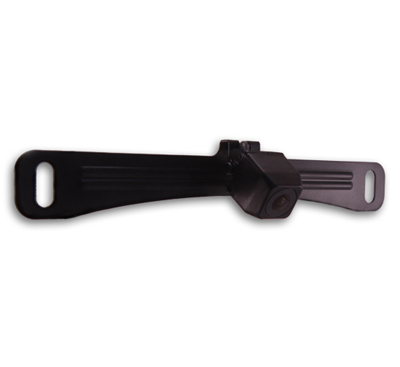
- Use a Backup Camera – these can be had for as little as $60 at Harbor Freight

- Use a Magnetic Ball and Stick setup so you can see the lineup easier

- Steer from the top of the wheel and move it in the direction you want to correct – MAKE SMALL ADJUSTMENTS !
- Short wheelbase trailers turn faster and you need to make very small adjustments
______________________________________________________
Launching –
- On a roller type trailer do not undo the bow or the boat will roll off the trailer.
- On a bunk type trailer – the bunks can and do rot – the bunks need to bend to cradle the boat – don’t use very heavy timbers it will deform the hull
______________________________________________________
Miscellaneous words of wisdom ~
- Trailer Tires can and will dry rot over time – the tread will be fine but the sidewalls will be weakened and fail.
- Inspect and clean and regrease wheel bearings at least a couple of times a season and before long trips. Carry spare bearings and a small grease gun.
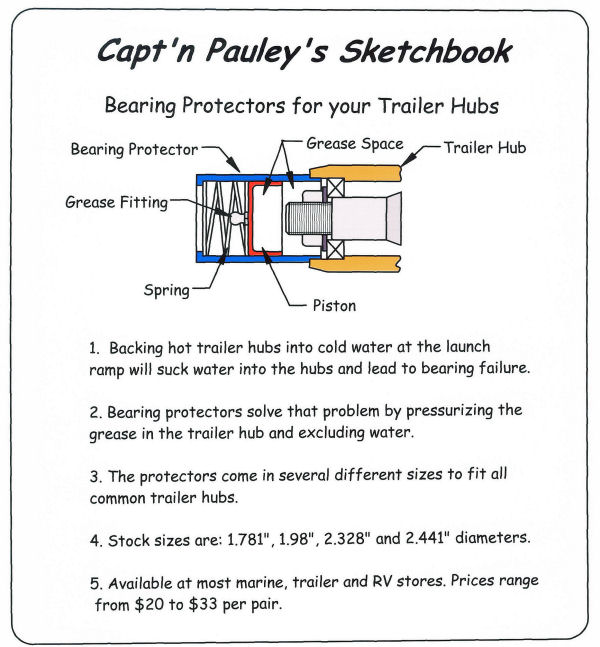
- Use bearing buddies to keep the wheels full of grease and water out.

- Always Torque Wheel nuts as specified.
- Chock your vehicle wheels when launching in case the brake slips or you lose traction. Harbor Freight also has these.

- Turn your wheels to the side before launching so if the truck slips it will move sideways to the ramp. ( A Herb tip )
Thanks Lee for your fine presentation.
Sail Cleaning Tips
Sail Cleaning Tips
Keeping sails clean is part diligence, part science, and part fate. The fate part is closely associated with the environment and climate where the sails are used and stored. For example, if you use and store your sails in the Pacific Northwest, mildew will be a constant and persistent foe.
When you find your sails are in need of cleaning, we suggest the following steps:
Cleaning Dacron sails:
- Clean sails on a smooth surface. Avoid pavement and gravel or you will find yourself sanding the back of your sail as you meticulously clean the front.
- Use a mild soap solution and fresh water.
- Use a soft bristle brush to remove dirt and salt.
- Rinse thoroughly with fresh water. Keep rinsing until all soap residue is removed.
- To remove oil or tar stains use a small amount of lighter fluid.
- To remove mildew sailcloth manufacturers recommend a highly diluted solution of Sodium Hypochlorite (Bleach 3-5%). Because it is toxic to you and the environment, we (Port Townsend Sails) object to the use of bleach except as a last resort. We have also heard and common sense leads us to concur that bleach strips the coating from thread and leaves stitching vulnerable to UV damage.
- Never use bleach on nylon or laminated sails!
- A hot tip for cleaning sails from PT Sails staff: Dilute 2Tbs Woolite and 1-2 cups vinegar in 1 gallon water. Some of our customers have had great luck with this solution.
Cleaning nylon sails:
- Clean spinnakers and other light-air sails made of Nylon by rinsing with fresh water.
- Do not use bleach or other solvents; they will damage the fabric!
- After cleaning: Dry the sails by hanging in a well ventilated area.
- Avoid flogging.
- When you are sure no moisture remains on the sails, fold or roll the sails loosely.
- Store sails in a dry, well-ventilated area away from direct heat.
Note: Keeping sails clean and dry is an essential part of sail maintenance. Storing sails out of the elements when not in use can prolong their life by years.