Part Three: The Project
When Escapade and her crew arrived in St. Thomas, the glamorous part of the trip was over and the down-and-dirty began. That included doing laundry, cleaning ocean salt off the boat, refilling fuel and water, and reprovisioning for the next phase of the trip, the work at the church. We departed St. Thomas the next day and sailed 20 miles east to Cane Garden Bay on the west end of Tortola, British Virgin Islands.  We soon began to learn that problems can be solutions if you approach them the right way. The dinghy that we had hoped to repair in Hampton was too damaged to warrant the cost of repairing, so we had no dinghy to go ashore in. Fortunately for us, the fuel dock in Cane Garden Bay was not being used under the present circumstances in BVI, so we were able to dock there. Normally we would go through Customs and Immigration at Soper’s Hole, Tortola or Great Harbor, Jost Van Dyke. Both were only an hour away from Cane Garden Bay, but both had been literally blown away by Hurricane Irma. The only C & I office left was over 3 hours away in Road Town in an inconvenient temporary location. Pastor Turnbull met us on the dock with another solution. He brought a C & I officer with him and we completed all the necessary paperwork on the dock. It has never been easier!
A tour of the church property revealed significant damage to what had been an architecturally elegant church building.  The palm tree lined walkway to the front door was obstructed with broken trees and debris. The church’s roof was mostly intact but had a gaping hole in it. Water had poured into the church sanctuary ruining the electronics, soaking the carpet and upholstery, and brewing the omnipresent stench of mold and mildew. Behind the church, debris had washed down or flown down from the mountain. Beside the main building, the church’s day care center was operating with much of its roof missing. And in front of the church, most symbolically, the church’s sign with an emblem of the world and the cross was hanging upside down. The church property was no worse than most of the rest of Cane Garden Bay. The whole community had been ravaged by Irma.
The building we worked on is not the main church building,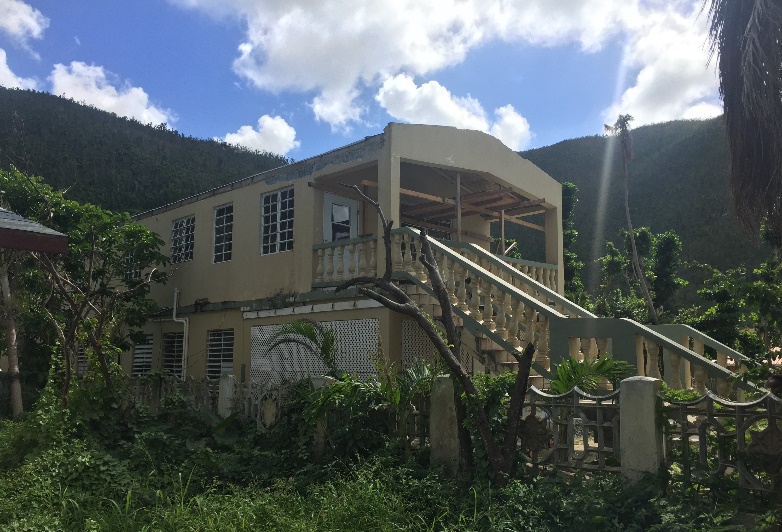 the roof of which is much too steep for amateur roofers without proper equipment. We worked on the day care center, a two story building with an apartment on the second floor. When we arrived the church members had begun the work to put a new roof on the building. The top of some of the concrete walls had literally been ripped away by the storm, so they had recast the concrete and put
 new 3x 8 rafters in place. Some of the original roofing remained, but we had to tear off the bent metal roofing and some of the plywood and 2×4’s under it. The church had purchased a stack of 4×8 plywood sheets, so we used those to complete the roof over the rafters.
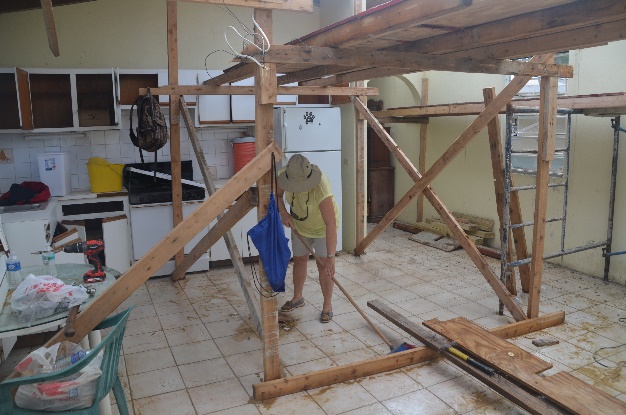

Jeff and John had done this sort of work before and came fully prepared with power tools and carpentry skills. They were the brains and brawn of the operation. Larry assisted in moving the plywood to the roof and preparing the roof for the new sheets. Diana and Elaine cleaned out the rubble from inside the building’s second floor and removed debris from the church grounds. Pastor Turnbull was on the roof working with us from time to time.
After the plywood sheeting was in place, we used seven rolls of Wind and Water Seal roofing to cover it. This is not a product that we were familiar with. It is essentially a 3-foot wide roll of rubber with a heat reflective cover on the top side and peel-and-stick on the bottom side, like a giant heavy roll of contact paper. The challenge was rolling it on smoothly without bubbles, or even worse, getting the roll stuck to itself. We were getting better with the application technique we had developed when the pastor arrived and showed us the easy way to do it. So one half of the roof looks more professional than the other, but all of it will work.
Wind and Water Seal will keep rain out, but it is vulnerable to UV degradation, so a metal roof will have to be put over that. The Galvalume metal had not arrived yet so we couldn’t go any further and it requires special screws which have proven difficult to acquire. So the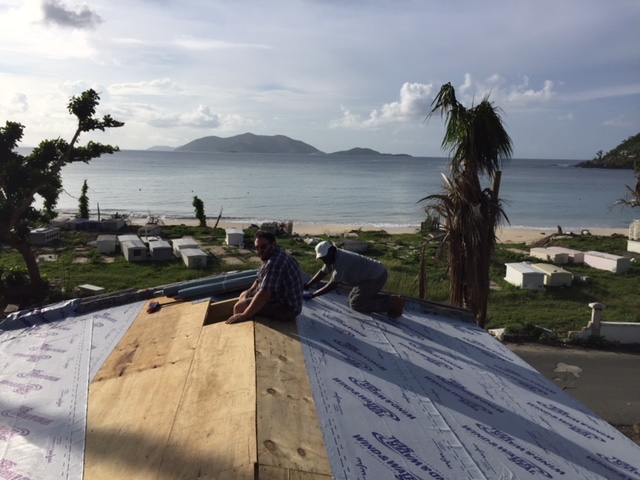 re is another phase of the roofing project that will need to be done before long.
Availability of tools and materials was sort of hit-or-miss. In the best of times selection is rather limited in BVI, but after Irma supply was very low and demand was very high. Diana and I brought a few hundred dollars’ worth of roofing supplies with us on Escapade. Jeff and John left a few hundred dollars’ worth of tools that they had brought with them. It was not surprising that the tools the church had available were not very adequate. Diana and I sailed back to St. Thomas to buy some clean-up tools that are needed. We went to Home Depot expecting a good array of building supplies and found that Home Depot had lost most of its roof when Irma hit St. Thomas. It was operating in about a fourth of its usual space with a limited inventory. We bought push brooms and rat traps there. We didn’t see any rats at the church, but people told us that they are having to fight rats in their homes. We went to Ace Hardware and bought flat blade shovels and mops. On a second trip back to St. Thomas we found ceiling fans that had not been available before.
 In spite of the hardships that the islanders have endured, we found the people of Cane Garden Bay Baptist Church to be very resilient and optimistic. The worship songs were filled with thanksgiving for God’s provision and exuberantly sung. The preaching was upbeat. Many people who had lost homes or businesses told us that they were just thankful that they and their family were alive. Others were grateful that they still had a job. People we met on the street were cheerful in spite of the difficult living conditions. At Cane Garden Bay Baptist Church faith endures. Hope springs eternal.
 Love of the Lord is alive.


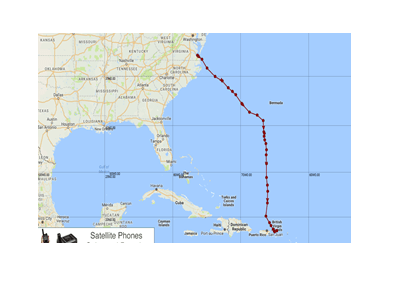
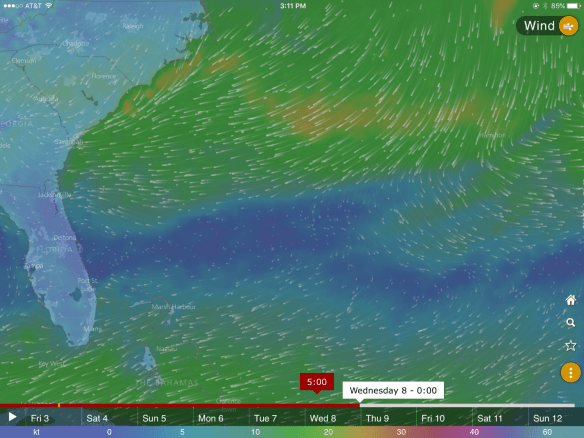 Unfortunately the Windy app showed a giant hole in the wind stretching from the coast of Florida several hundred miles to the east. The rhumb line that we had hoped to sail to BVI would take us through several days without wind. Escapade has an inboard diesel engine and a large fuel tank, but would it be enough to get us through the windless patch? We calculated Escapade’s cruising range to be about 1000 miles on 220 gallons of fuel, but BVI was 1500 miles away. And that doesn’t count fuel usage by the generator to run the refrigeration. So we chose to sail east toward Bermuda after crossing the Gulf Stream near Cape Hatteras. The sailing was slow, and we motorsailed frequently to keep speed from falling below 5 knots. Later on, our standards eroded and we were content to sail if we could keep boat speed above 4 knots.
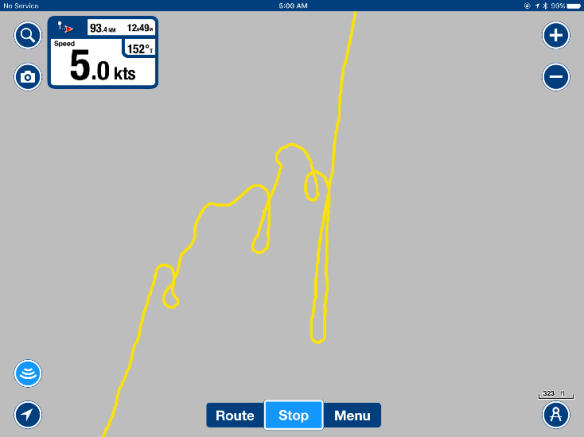 About 200 nm northwest of St. Thomas it had a psychotic event and started sailing us in sharp circles as shown by the track in this chart. I was asleep but sensed something weird going on. I jumped up to help the crew on watch get the helm under control. The autopilot refused to behave so we had to turn it off and hand steer the boat. That’s the normal way we sail on a lake in the daytime, so what’s the big deal? On the ocean there are no easy points of reference to steer by as there are on a lake. All 360 degrees look exactly the same. And night time makes it all the more tedious to steer by watching the compass. So we started the engine, furled the genoa, and left the main up for stability. Since we were motoring, we changed course and headed directly toward St. Thomas.
 Charter companies don’t own their boats, they belong to clients around the world and are managed by the charter companies. When Irma hit Paraquita she tore all the boats off their heavily chained orderly moorings and raked them into one corner of the bay. Most lost their masts, many were upside down; all were distressed.
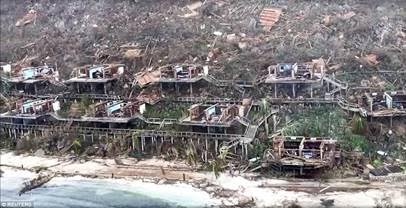 Concrete walled residences were ripped open. Landmarks like the Bitter End Yacht Club had been scraped from the hillside. Irma left BVI residents in the dark and cut off from each other and from the outside world. The electric grid was demolished. Roads were impassible, either washed away or clogged with debris. Telephones were inoperable with land lines and cell phone towers blown away. The islands that had been green the day before Irma, were now brown with every leaf stripped from the trees and bushes that remained. An eerie silence prevailed–no birds or frogs or insects dared to make a sound.
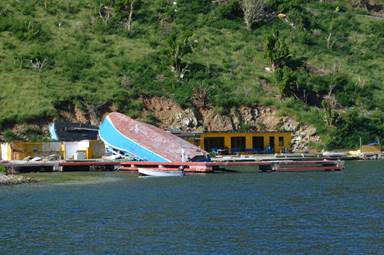 Many businesses are open and trying to function, but don’t count on using a credit card–that requires operating infrastructure. The most invisible part of BVI’s loss is the loss of jobs. Without a charter fleet, there is no tourism; without tourism, restaurants, grocery stores and dive shops have fewer customers to serve. Progress is evident, but the Paradise that was lost in 12 hours won’t be found again in 12 weeks or even 12 months. Restoration of Paradise is a long way off.
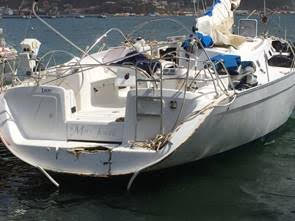 But this seemed more personal than settling an insurance claim on our boat. After enjoying BVI for 20+ years and knowing many people there by their first names, we felt that we should do something to help. We began by giving some money to rebuild a school. That’s useful but impersonal. So we decided to go there and find a place to help restore this broken BVI to the way we had come to know it. And our sailboat Escapade could provide a mobile base to work from. There wouldn’t be any hotels to stay in, and if there were, local people would need them. Escapade can sleep 6-8 people comfortably. There wouldn’t be any electricity to charge phones or power tools, but Escapade has a generator. There might not be enough clean water to drink, but Escapade has a water maker. There would be a shortage of building supplies and tools, but Escapade could transport many items from the USA.